If you are developing a new hardware product in 2026, one of the earliest and most consequential decisions you will face is choosing between injection molding and 3D printing (additive manufacturing). Get it wrong, and you could burn through budget on unnecessary tooling — or worse, discover too late that your chosen process cannot meet quality or cost targets at scale.
This guide cuts through the noise with data-backed analysis, real-world cost comparisons, and a decision framework tailored for brands working with Chinese manufacturing partners.
The Fundamental Difference: Subtractive vs. Additive Thinking
Before diving into costs and timelines, it helps to understand the core philosophical difference between these two processes.
Injection molding is a "subtractive" mindset: you invest heavily upfront in tooling (molds), but each part you produce becomes progressively cheaper. It is optimized for high volume, low per-unit cost, and consistent repeatability.
3D printing (additive manufacturing) is the opposite: minimal upfront investment, but each part costs roughly the same regardless of quantity. It is optimized for low volume, high geometric complexity, and rapid iteration.
| Dimension | Injection Molding | 3D Printing |
|---|---|---|
| Upfront tooling cost | $3,000 – $25,000 | $0 – $500 (setup) |
| Per-unit cost (typical) | $0.10 – $5.00 | $5 – $150 |
| Minimum lead time | 4 – 8 weeks (tooling) | 2 – 7 days |
| Best volume range | 500 – 1,000,000+ units | 1 – 500 units |
| Geometric freedom | Limited by mold design | Nearly unlimited |
| Surface finish | Production-grade smooth | Layer lines visible (post-processing needed) |
| Material range | Broad (ABS, PC, PP, TPU, etc.) | Growing but more limited |
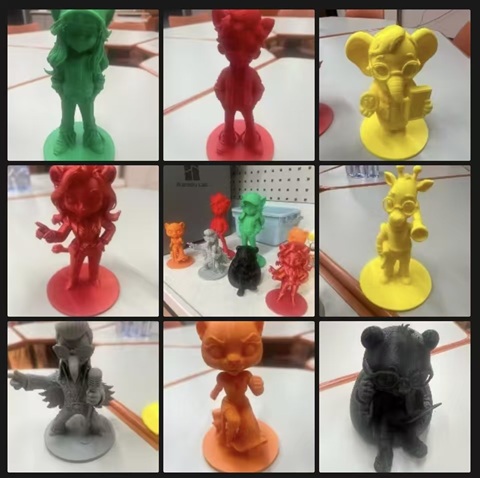
Colorful FDM 3D printed figures from our prototyping workshop — ideal for form/fit validation before committing to tooling
The Break-Even Analysis: Where Injection Molding Starts Winning
The single most important number in this decision is your break-even volume — the point at which injection molding becomes cheaper than 3D printing on a per-unit basis.
For a typical consumer electronics enclosure (100–200g, moderate complexity):
- 3D printing cost: ~$15 – $50 per unit (depending on material and technology)
- Injection molding tooling: ~$5,000 – $15,000 (one-time)
- Injection molding per-unit cost: ~$0.50 – $3.00
Using the mid-range numbers: if 3D printing costs $25/unit and injection molding costs $8,000 in tooling plus $1.50/unit, your break-even point is approximately 370 units.
Rule of thumb for 2026: If you need fewer than 300–500 units, 3D printing is usually more cost-effective. Above 500 units, injection molding becomes increasingly compelling. Between 300–500 is the "gray zone" where other factors (timeline, design complexity, risk tolerance) often drive the decision.
When 3D Printing Is the Clear Winner
Despite injection molding's dominance at scale, there are scenarios where 3D printing is not just viable — it is objectively superior:
1. Rapid Prototyping & Design Validation
Before you spend $8,000–$15,000 on a mold, you need to validate your design. A 3D printed prototype in the correct material can reveal fit issues, ergonomic problems, or assembly conflicts in 2–5 days rather than 4–8 weeks.
2. Highly Complex Geometries
Internal lattices for weight reduction, conformal cooling channels, organic shapes that would require impossible mold actions — these are where additive manufacturing shines.
3. Low-Volume Customization
If your product requires customer-specific variants (different sizes, personalized elements, regional adaptations), 3D printing eliminates the need for multiple molds.
4. Market Testing Before Scaling
Launch a 3D printed "beta batch" of 50–200 units, gather real customer feedback, iterate the design, then commit to tooling. This risk-reduction strategy is increasingly popular among hardware startups in 2026.
Precision injection mold tooling — the upfront investment that pays off at scale
When Injection Molding Is Non-Negotiable
Some product requirements simply cannot be met cost-effectively with additive manufacturing:
1. High-Volume Production
At 10,000+ units, injection molding's per-unit cost advantage becomes overwhelming. A $10,000 mold amortized over 50,000 units adds just $0.20 per part.
2. Strict Surface Finish Requirements
Consumer-facing products (beauty devices, premium electronics) often require glossy (SPI-A2) or textured (Mold-Tech) finishes that are only achievable with molded parts.
3. Regulatory Compliance
Food-contact applications, medical devices, and certain electronics require materials and processes with full traceability — something injection molding's established supply chain handles better than 3D printing in 2026.
4. Cost-Sensitive Mass Markets
If your retail price point is under $30 and you need 50%+ margins, injection molding is likely your only path to viable unit economics.
What Is Changing in 2026: Three Trends to Watch
The injection molding vs. 3D printing landscape is evolving rapidly. Here are the developments most relevant to product developers this year:
Trend 1: AI-Driven Process Optimization
Leading Chinese manufacturers are now deploying AI-powered systems that optimize mold flow simulations, predict defect locations before tooling, and automatically adjust 3D printing parameters mid-build. This is reducing both tooling iteration cycles and print failure rates by 20–40%.
Trend 2: Sustainable Manufacturing Compliance
EU regulations (PPWR, CSRD) and US state-level packaging laws are increasingly requiring recycled content and carbon footprint disclosures. Injection molding offers well-established recycled material supply chains (rABS, rPP), while 3D printing is catching up with bio-based filaments and resin recycling programs.
Trend 3: Hybrid Workflows Becoming Standard
The smartest manufacturers in 2026 are not choosing one process over the other — they are combining them. Typical hybrid workflow:
- 3D printing for rapid prototyping and market validation (weeks 1–4)
- Soft tooling (aluminum molds) for pilot production of 500–2,000 units (weeks 5–10)
- Hardened steel tooling for mass production (week 11 onward)
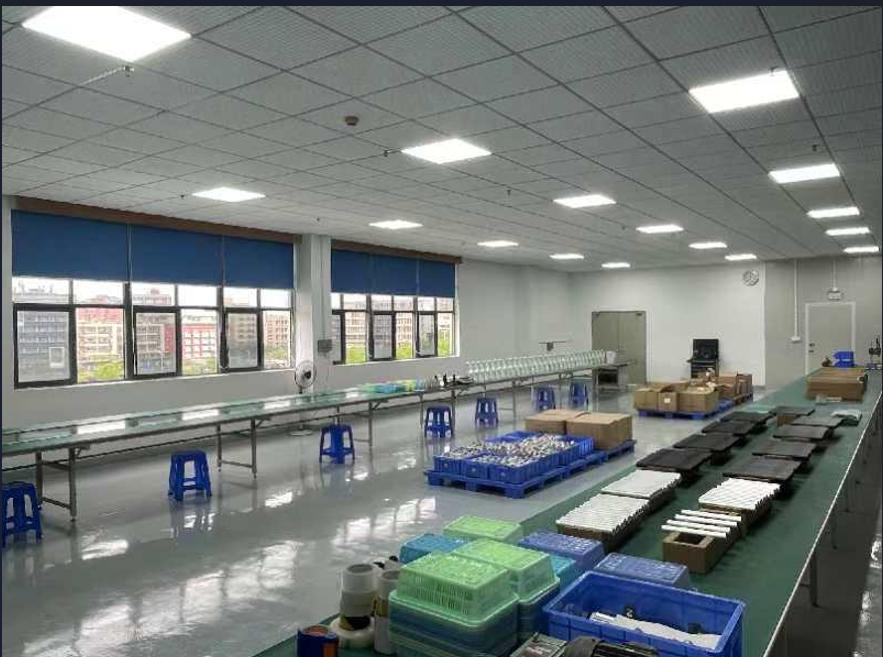
Automated production line — the final stage of the hybrid workflow, where injection molding delivers scale
Decision Framework: Which Process Should You Choose?
Use this simple decision tree:
| Your Situation | Recommended Process |
|---|---|
| Need parts in under 1 week | 3D Printing |
| Volume under 300 units | 3D Printing |
| Volume 300–2,000; design not yet finalized | Soft tooling (aluminum mold) |
| Volume 2,000+; design validated | Injection Molding (steel) |
| Highly complex internal geometry | 3D Printing or hybrid |
| Food contact / medical regulatory | Injection Molding |
Working With Chinese Manufacturers: Practical Tips
If you are sourcing from China (still the dominant destination for both injection molding and 3D printing in 2026), here are three practical recommendations:
1. Prototype locally, tool in China. Use a local 3D printing service for rapid iteration, then send the finalized design to your Chinese partner for tooling. This minimizes shipping delays during the iteration phase.
2. Demand DFM feedback before tooling. A quality Chinese manufacturer will provide Design for Manufacturing (DFM) analysis that identifies draft angle issues, wall thickness problems, and gate location optimizations before cutting steel.
3. Start with soft tooling. Aluminum molds cost 30–50% less than hardened steel and produce 5,000–50,000 units — enough to validate demand before the full investment.
Bottom Line
Injection molding and 3D printing are not competitors — they are complementary tools in the modern product developer's arsenal. The right choice depends on your volume, timeline, design complexity, and risk tolerance.
In 2026, the most successful hardware brands are not betting everything on one process. They are using 3D printing to de-risk early, injection molding to scale profitably, and hybrid workflows to bridge the gap.
Not sure which process fits your product? Send us your design files and we will provide a free manufacturing process recommendation with cost estimates for both approaches.
Last updated: June 16, 2026 | Cost figures based on 2026 Shenzhen manufacturing market rates. Actual costs vary by product geometry, material selection, and supplier.
Comments (3)
The hybrid workflow section is exactly what we needed. We are currently stuck in the "gray zone" at ~400 units and could not decide whether to tool or keep printing. The soft tooling recommendation just saved us from over-committing.
Great breakdown of the sustainability angle. We are entering the EU market and the PPWR compliance requirements are a major concern. The note about recycled material supply chains for injection molding is very helpful for our planning.
Can you elaborate on the AI-driven process optimization trend? We are working with a factory in Shenzhen that claims to use AI for mold flow simulation but it is hard to verify. What specific metrics should we ask for to confirm they actually have these capabilities?
Leave a Comment