How one phone call at 2 AM saved a product launch — and changed how we think about quality forever.
It was late November. Marcus, a first-time hardware founder from Chicago, had just received his first mass production batch of smart home sensors. The factory had gold supplier status. The unit price was 15% below our quote. Then the email arrived.
"We're seeing about 8% fail rate. Some units won't pair. Others overheat. The factory says it's within acceptable range. Is this normal?"
It wasn't normal. It was a disaster. 1,000 units in a Los Angeles warehouse. Another 1,500 on a container ship. Total value at stake: roughly $47,000 — not counting Amazon fees, storage costs, or brand damage.
Our engineers found the root causes: PCB tombstoning on 40% of boards from a "optimized" reflow profile, a wrong capacitor substituted in the power circuit, and housing seam gaps exceeding 0.3mm. The factory wasn't malicious — they were operating under a different definition of "quality."
Quality Control Is a Decision Architecture — Not an Inspection
The single most important principle: quality control is not something you do at the end of a production run. It's a decision architecture you build into every stage.
At SciPure, we break QC into three concentric stages:
| Stage | When | Catches | Fix Cost |
|---|---|---|---|
| Stage 1: Design-for-Quality | Pre-production / DFM | Design flaws that cannot be inspected away | ~$0–$500 |
| Stage 2: Process Control | During production | Process drift, material swaps, equipment issues | ~$500–$5,000 |
| Stage 3: Final Verification | Pre-shipment | Batch defects, cosmetic issues, compliance gaps | ~$5,000–$50,000+ |
Every stage you skip multiplies your fix cost by roughly 10x. Marcus's factory had Stage 3 inspection but zero Stage 1. The design flaws were baked in before the first unit came off the line.
Stage 1: Design-for-Quality — Before You Meet Your Factory
80% of quality outcomes are determined here. Key protocols:
- Material Data Sheet lock-down: Specify exact grade, color code, and PFAS-free status — not just "ABS plastic"
- ISO 2768 tolerances: Document in a control plan the factory must sign off on
- BOM freeze protocol: Unauthorized component substitution is the #1 cause of "Quality Fade"
- Firmware lock: The firmware version must be part of your golden sample baseline
Stage 2: Process Control — Where AI Changes Everything
Traditional inspection relies on random sampling (~2% of batch) with human inspectors who fatigue after 30–60 minutes. In 2026, AI-powered machine vision changes the game:
| Capability | Traditional | AI-Powered |
|---|---|---|
| Detection accuracy | 80–90% | 97–99% |
| Coverage | ~2% sampling | 100% inspection |
| Operation | Shift-based | 24/7 continuous |
| Micro-defects | Invisible to naked eye | Micrometer-scale |
Even without AI, three checkpoints separate professionals from amateurs: Initial Production Check (IPC) at 10%, During Production Inspection (DUPRO) at 50%, and Pre-Shipment Inspection (PSI) before goods leave.
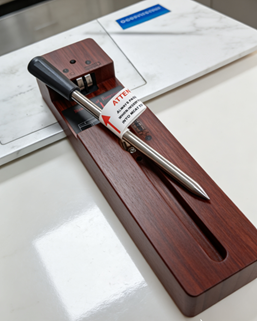
Hands-on functional testing — the critical last mile that complements automated inspection systems
The Hidden Enemy: Quality Fade
Quality Fade is the gradual, intentional degradation of product quality across successive batches. A slightly thinner housing wall here. A lower-grade adhesive there. It targets your longest relationships — the factory you stopped auditing because "they've never let us down."
Defense strategy: baseline benchmarking every 3 batches, price index awareness, tier-2 supplier visibility, and unannounced audits at least once per year.
The Counterintuitive Principle
The most expensive quality control decision you'll ever make is trusting a factory because they've never given you a reason not to.
Trust is earned continuously, not granted upfront. Every inspection protocol, every AI vision system, every corrective action plan — these are the difference between a product launch that builds your reputation and one that costs you $47,000 to learn a lesson.
Need a QC review of your next production run? Send us your product specs for a free three-stage QC evaluation.
Published: June 22, 2026 | Category: Quality Control & Manufacturing Guide
Comments (3)
The Quality Fade section is eye-opening. We just caught a housing wall thickness reduction on our 6th batch from a "trusted" supplier. Your defense strategy #1 — baseline benchmarking — just became our new SOP.
We implemented the three-stage QC framework after reading this. The IPC at 10% caught a wrong raw material batch that would have cost us $12,000 to fix at final inspection. Game changer.
The AI inspection comparison table convinced our CFO to approve the $25K vision system upgrade. ROI projection shows payback in 14 months just from reduced scrap. Well-researched article.
Leave a Comment