Last November, Marcus — a second-time hardware founder from Austin — sent me an email with a subject line that made my stomach drop: "I think we just paid for someone else's factory upgrade."
Here's what happened. Marcus found a manufacturer on a well-known B2B platform. Gold supplier badge. Verified business license. Five-star reviews. Photos of a clean production floor. Fluent English sales rep. Samples that looked great. He placed an order for 10,000 units, paid a 50% deposit: $62,000.
Eight weeks later, the product was fundamentally wrong: different plastic grade (ABS instead of PC+ABS), wrong colors, impossible assembly (0.8mm gap on mating parts), PCBs from an unauthorized supplier with 14% continuity failure rate, and packaging with a misspelled brand name.
Total loss: $340,000 — $62K deposit, $78K air-freight rush re-ordering, $180K in lost retailer shelf placement fees, $20K in legal costs.
When we tracked down the actual production facility, the "factory" Marcus had seen was a showroom operated by a trading company. Actual manufacturing was subcontracted to a tier-three shop 200km away.
This isn't rare. Industry data shows 68% of B2B platform listings presenting themselves as direct factories are actually trading companies or intermediaries.
The Three-Layer Verification Protocol
Layer 1: Digital Identity Verification
Get their Unified Social Credit Code and run it through gsxt.gov.cn. Verify:
- Registered address matches the facility they claim
- Business scope includes your product category
- Operating status is "open" — not suspended or revoked
- Registered capital is realistic for claimed equipment
- Establishment date gives real operational history
What most people miss: Cross-reference the legal representative's name against wenshu.court.gov.cn for litigation history. We caught a factory last year whose rep had been named in three product liability lawsuits — their Alibaba profile showed zero negative feedback.
| Check | Green Flag | Red Flag |
|---|---|---|
| License verification | Matches facility, 5+ years | Cannot verify, revoked status |
| Litigation check | Clean history | Multiple quality lawsuits |
| Export data | Volume matches claims | $50M claimed, $3M actual |
Layer 2: Operational Capability Verification
Video Line Walk — Done Right:
- Request live video, not pre-recorded — staged tours hide the truth
- Ask them to show your specific equipment, material storage, QC station
- Request a "pan-and-zoom" test — genuine operators respond instantly; proxies hesitate
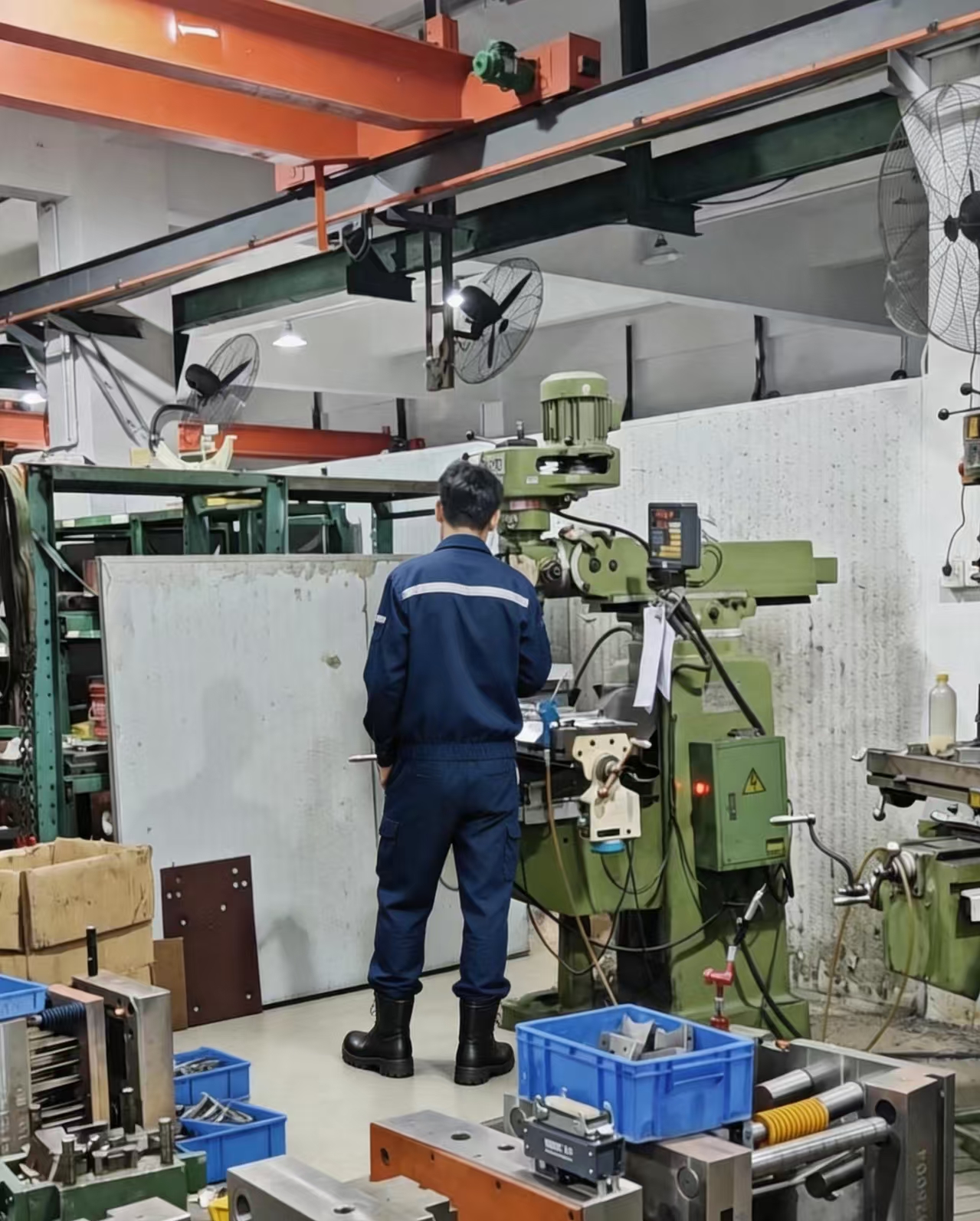
- Look for the showroom vs. production tell — real floors have scrap, tooling marks, oil stains
Engineer Verification: Insist on speaking with the engineer who would handle your project. Ask technical questions: draft angles, injection pressure estimates, material shrinkage rates. A competent engineer answers naturally. A salesperson reading from a script cannot.
Layer 3: Quality System Verification
| Document | What It Reveals | Red Flags |
|---|---|---|
| ISO 9001 + audit report | QMS exists and verified | Expired cert, audit >18 months |
| Internal QC checklist | Product-specific standards | Generic, no product criteria |
| CAPA log | How failures are handled | No system, repeat issues |
| Material COAs | Supply chain traceability | Missing batch numbers |
| Calibration records | Measurement reliability | Outdated >12 months |
| QC training records | Inspector competence | No documentation |
The "Mystery Sample" Test: Place a small trial order with intentionally ambiguous specs on one non-critical dimension. See if they flag it (green), assume and proceed (yellow), or ship defects (red — walk away).
The 2026 Factor: Two Major Developments
Forced-Labor 301 Investigation
In March 2026, the U.S. Trade Representative launched a Section 301 investigation targeting 60 economies. Results published June 2026 propose a 12.5% additional tariff on goods from 46 economies including China, Vietnam, India, and Thailand.
Practical impact: Your vetting protocol now needs a fourth layer — supply chain traceability verification. You need to know who supplies the polymer pellets, who manufactures the PCBs, and whether every entity can prove no forced labor in the production cascade.
AI: Better Detection AND Better Deception
On one hand, AI-powered inspection achieves 99.8% pass rates (TCL) and 99.99% defect interception (JAC Motors × Huawei). Factories with real AI systems leave verifiable digital footprints.
On the flip side: deepfake video calls, AI-generated facility photos, ChatGPT-written technical responses, synthetic certificates. This is why Layer 1 (official registry) and Layer 3 (document authentication) matter more than ever.
The Decision Framework
| Category | Green (Proceed) | Yellow (Deepen) | Red (Walk Away) |
|---|---|---|---|
| Business Identity | License verified, 5+ years, clean litigation | <2 years, address mismatch | Unverifiable license, multiple lawsuits |
| Operational | Live production video, engineer available, verifiable equipment | Showroom only, sales-only contact | Refuses live video, staged equipment |
| Quality System | Current ISO, product QC, CAPA, mystery sample passed | Old ISO, generic docs, no CAPA | No documentation, shipped defects |
| Compliance (NEW 2026) | Traceability system, understands forced-labor docs | Partial traceability, reactive | No awareness, dismissive, opaque |
| Communication | Asks clarifying questions, flags design issues | Passive, agrees to everything | Defensive, avoids direct answers |
Rule of Three Yellows: Three+ yellow flags = require on-site verification. One Red Rule: Any single red flag is disqualifying.
China+1 Reality Check
"Should I move to Vietnam/Thailand/India?" You're trading one set of problems for another:
- Vietnam imports ~80% of industrial components from China — supply chain hasn't diversified, it's elongated
- Factory capacity constraints: diverted orders outpaced industrial buildout
- Quality management systems are less mature — inspection rates are non-negotiable
- MOQs are 2-4x higher than equivalent Chinese factories
- Vietnam itself faces concurrent Section 301 probes — "safe harbor" is eroding
The answer: Build a verification protocol robust enough to work wherever you manufacture. A bad factory in Dongguan and a bad factory in Bac Ninh will both cost you six figures.
The Principle
The most expensive manufacturing partnership isn't the one that charges the highest per-unit price. It's the one that looked perfect on paper — and wasn't verified deeply enough to reveal what was underneath.
Marcus eventually launched — eight months behind schedule, $340K over budget, with a partner we helped qualify. His second order (20,000 units) arrived with a 1.1% defect rate. He still hasn't visited China. The verification happened before the first dollar changed hands.
Need help vetting your manufacturing partner? Send us your factory's details for a free Layer 1 verification assessment.
Published: July 17, 2026 | Category: Factory Verification & Supply Chain Due Diligence
Comments (3)
This is essentially my story (name changed, I assume). The "mystery sample" test alone would have saved us $340K. We're now implementing the full three-layer protocol before any new supplier engagement. The litigation check on wenshu.court.gov.cn caught two more questionable factories in our pipeline.
The China+1 section answered exactly what our board has been asking. We ran the numbers on Vietnam vs. China with the traceability requirement factored in — landed cost difference was only 4% after accounting for component imports from China. Not worth the capacity risk. Staying in China with better verification.
The engineer verification technique is brilliant. We asked our candidate factory "What draft angle for this undercut?" during a live video call. The sales rep passed the phone to an engineer who answered immediately with a specific angle AND suggested adding a lifter. Green flag confirmed. We're proceeding with confidence.
Leave a Comment