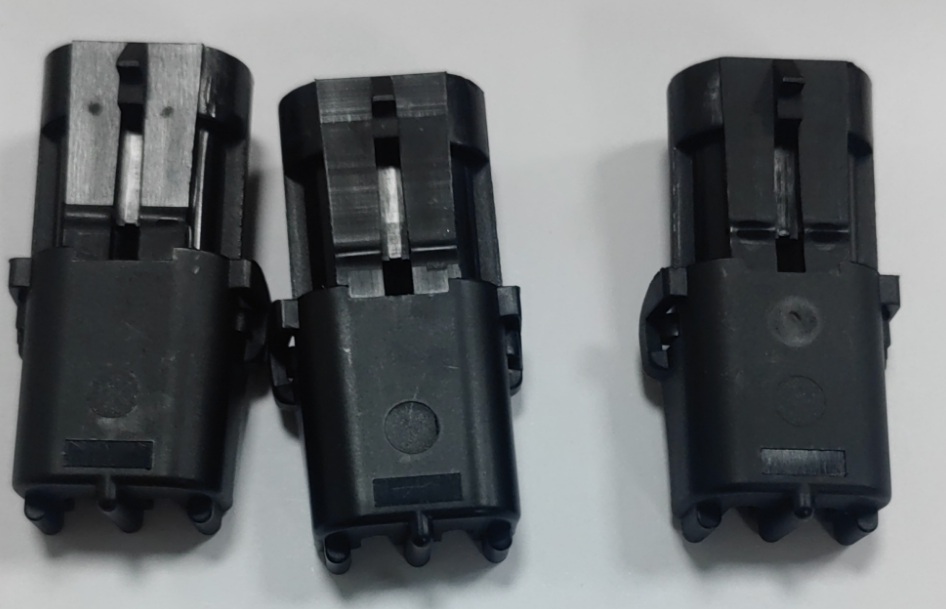
Last September, Sarah emailed us at 2 AM Shenzhen time. "I thought we were in production. The factory sent photos of parts coming off the line. Our DFM report was approved three months ago. But when our QC team pulled 200 units, 34 failed functional test. Another 47 had cosmetic issues I've never seen on any prototype. What happened?"
Sarah wasn't a first-time founder. She'd shipped two previous products. She had a DFM report — a thick one, with checkmarks and engineering stamps. Her factory was ISO-certified. Everything looked right on paper.
Here's what happened: her factory received the DFM report, addressed four of fourteen flagged issues, and proceeded to tooling assuming the rest would "work out." Nobody told Sarah. Nobody updated the timeline. Nobody connected the dots between an unresolved wall thickness variance and the sink marks on 23% of housings.
Out of 127 projects at SciPure, 73% arrived with an approved DFM report that had never been fully executed. Not malicious — because the gap between "DFM approved" and "production-ready" is where hardware products go to die quietly.
What the Latest Data Is Telling Us
The Fictiv 2026 report — surveying 321 director-level+ executives — dropped two findings that should reshape every hardware timeline:
Finding #1: AI is now infrastructure. 97% of manufacturing leaders say AI is embedded in core workflows. 95% call it "vital to future success." AI maturity jumped from 87% to 93% year-over-year.
Finding #2: Manufacturing planning is the #1 supply chain challenge. 62% identify it as their greatest pain point — ahead of sourcing, prototyping, and demand forecasting. And 83% of engineers spend 4+ hours per week on procurement instead of design work.
Meanwhile, tariff complexity compounds timeline risk. As of July 2026, effective rates average 21.6% for consumer electronics from China. The USTR's structural overcapacity investigation (July 24 deadline) could add another 10-25% on targeted categories.
Month 1: The DFM Resolution Sprint
Month 1 on a Gantt chart: "DFM Review & Revision." In practice: a sprint to convert every DFM finding into a CAD change, a documented risk acceptance, or a test plan.
The Resolution Matrix
| DFM Finding | Severity | Resolution Action | Owner |
|---|---|---|---|
| Wall thickness 0.8mm (min 1.2mm) | Critical | Redesign housing rib | Engineer |
| Undercut requires side-pull | High | Evaluate lifters vs. redesign | Tooling engineer |
| Gate location → visible weld line | Medium | Move gate; accept spec change | You + molder |
| Material "ABS" (no grade) | High | Select grade (e.g., LG HF-420) | Materials |
The rule: every row has an owner and a deadline. Blank rows = hidden landmines.
AI in 2026: Leo AI (G2 #1) catches 80% of DFM issues instantly, 95% within 2 weeks. ZELIA generates 1,000+ training variants from 5-10 clean images. Use AI to find problems faster. Use human judgment to make sure someone fixes them.
Month 2: Tooling, Mold Flow, and the T0 Reality Check
Month 2 is where steel gets cut. It's also where something psychologically dangerous happens: you start feeling productive.
Before steel is cut, you need a T0 acceptance criteria document — measurable, pass/fail for every critical dimension, functional test, and cosmetic requirement. T0 samples always have issues. Without pre-defined criteria, you argue about methodology instead of fixing problems.
| Change Type | Pre-T0 Cost | Post-T0 Cost |
|---|---|---|
| Add draft angle | $0 (CAD) | $3,000-$8,000 (steel rework) |
| Change wall thickness | $0 | $2,000-$5,000 |
| Move gate location | $0 | $1,500-$4,000 |
| Material change (different shrink) | $500-$2,000 | $5,000-$20,000+ |
OPD Design 2026 analysis: pre-tooling changes $500-2,000; post-tooling $5,000-50,000+. 10-25x penalty multiplier.
Month 3: The Valley of Adjustment — Where Projects Go to Die
If one month determines whether your product ships on budget and on time, it's Month 3.
Three Parallel Workstreams
Workstream A: T1/T2 Sample Iteration — Document every defect. Prioritize blockers vs. acceptable deviation.
Workstream B: Functional Test Development — First-pass yield (FPY) is your north star. Industry average for new products: 85-92%. Best-in-class: 96%+.
Workstream C: Packaging & Logistics Setup — Retail packaging has its own 2-4 week tooling cycle. Shipping mode decision (air vs. sea = 5-8x cost delta).
Three Derailment Scenarios
- The Infinite T-Loop: T0 → fix → T1 → new issues → T2 → originals return. Recovery: Stop iterating. Go back to Resolution Matrix.
- The Scope Creep Cascade: "While we're modifying the mold, let's also add..." Each addition = 2-4 weeks + $3K-$15K. Recovery: Freeze scope at T0.
- The Certification Surprise: "FCC testing takes 6 weeks and our enclosure fails radiated emissions." EU Cyber Resilience Act fines up to €15M. Recovery: Engage cert lab immediately.
Tariff wildcard: Get formal HS code classification in Month 3. Three under-used tools: Section 301 exclusion requests, duty drawback (99% refundable if re-exported), and tariff engineering.
Month 4: Ramp-Up, QC Calibration, and the Handoff
Production ramp isn't a switch — it's a curve:
| Week | Daily Output | Focus |
|---|---|---|
| Week 1 | 100-300 units | Process stabilization, operator training |
| Week 2 | 300-500 units | Yield optimization, defect root-cause |
| Week 3 | 500-1,000 units | Full speed, QC calibration |
| Week 4 | Target volume | Steady state, continuous improvement |
QC Architecture: Three-Layer Model
Layer 1 — IPC: SPC on key dimensions, AI vision at critical stations (97-99% accuracy).
Layer 2 — OQC: AQL sampling, 100% functional test, cosmetic grading vs. golden sample.
Layer 3 — Pre-Shipment: Third-party inspection ($100-500), container loading supervision.
PVT Go/No-Go Thresholds
| Metric | Minimum | If It Fails |
|---|---|---|
| First-pass yield | >95% | Don't scale; investigate root cause |
| Critical Cpk | ≥1.33 | Process not capable |
| Cosmetic defect rate | <1% | Brand reputation risk |
| Functional pass rate | >99% | Field returns will be expensive |
| Packaging integrity | 100% ISTA | Shipping damage disaster |
The Decision Framework
| If you are... | Timeline | Biggest risk |
|---|---|---|
| First-time founder, <500 units | 5-7 months | Underestimating DFM resolution |
| Serial entrepreneur, CAD ready | 3-4 months | Assuming previous timeline applies |
| Established brand, new SKU | 2-3 months | Complacency — "we've done this" |
| Crowdfunding with fixed date | 4-5 months min | Date set by marketing, not engineering |
The Principle
A DFM report without an execution timeline is just an opinion. A timeline without DFM-driven milestones is just a wish. The bridge between them is called ownership — and it's the single factor that separates the hardware startups that ship from the ones that burn through their runway debugging problems that someone should have fixed four months earlier.
Sarah's second product? Same factory. Same team. Different process: Resolution Matrix with named owners. Weekly check-ins. T0 criteria before steel. Shipped eleven days ahead. Defect rate: 1.1%. Retailer reordered at 40% higher volume.
Have a DFM report sitting in your inbox? Send it to us for a free Resolution Matrix review — we'll tell you exactly which findings need owners before you cut steel.
Published: July 23, 2026 | Category: DFM Execution & NPI Playbook
Comments (3)
The Resolution Matrix transformed how we handle DFM. We just discovered seven findings from our last report with NO owners assigned. Factory said "we assumed you handled it." We assumed they handled it. This article paid for itself in the first paragraph. Implementing the three-workstream model for Month 3 starting Monday.
The Fictiv 2026 data points are eye-opening. 83% of engineers spending 4+ hours on procurement weekly — that's exactly our team. We implemented the Resolution Matrix and freed up 12 hours/week of engineering time. The pre-T0 vs. post-T0 cost table is now pinned to our project room wall. Brilliant article.
We were in the middle of Month 3 chaos when I found this. The "Infinite T-Loop" section described our exact situation — T2 arrived with original issues returning. Stopped iterating, went back to Resolution Matrix, found the fundamental assumption that was wrong. Redesigned from first principles. Saved an estimated $35K in tooling changes. Thank you.
Leave a Comment