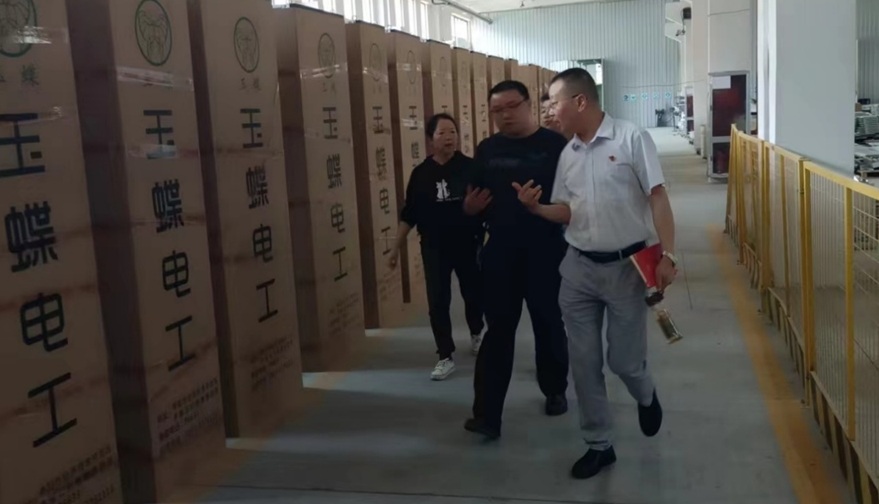
Remote factory vetting is the discipline of verifying a manufacturer's legal identity, real production capability, and quality system using document trails, live video, and third-party records — without setting foot on the factory floor.
Last February, a founder named Derek called me from Austin at 11 p.m. his time. He'd found "the one" — a Shenzhen supplier with a gleaming showroom, 4.9 stars across three B2B platforms, and a quote 22% below every other bid for his smart sous-vide circulator. He'd already wired a $48,000 tooling deposit. "I almost didn't call you," he said. "Everything looked perfect."
The panic started when our team ran the supplier's Unified Social Credit Code against China's national enterprise registry. The legal entity behind the pretty website was a trading company registered in a shared office, not the factory in the photos. The "showroom" was a rental in a trade-building lobby. The actual production was being subcontracted to a tier-three workshop 240 km away that had never made a sealed liquid appliance and had no pressure-test capability. If Derek's circulator had shipped, the first batch would have leaked on customers' countertops — and the "factory" would have pointed at a subcontractor it didn't control.
We were sleepless that week. Not because Derek was careless — he'd done everything a founder is told to do. He'd checked the reviews. He'd compared quotes. He'd even asked for photos. The trap wasn't a dishonest factory. It was a verification process that looked complete and wasn't.
At SciPure, our founder came out of the Foxconn-Apple joint lab — two decades of taking consumer electronics and home products from a concept on a whiteboard to tens of millions of identical units. Between us we hold 29 granted patents, and our founder was named a Shenzhen science-and-technology leadership award winner in 2020. We are a Shenzhen-based product engineering advisor: we help consumer-electronics and home brands manage the full journey from concept design to mass-production management, including DFM optimization, injection molding, electronics assembly, QC systems, and supply chain development — backed by our own 2,000 m² production facility in Shenzhen's Guangming District. We've run 150+ product programs since 2024, and in roughly one in four cases where a client arrived with a "confirmed supplier," a 20-minute registry check revealed the partner wasn't who the paperwork claimed.
The 2026 Wrench: Tariffs Made "Good Supplier" a Compliance Question, Not Just a Quality One
The reason remote vetting matters more in 2026 than ever is that the cost of a wrong supplier is no longer just defective units — it's now a tariff and compliance landmine. Here is the 2026 reality every founder sourcing from Asia must price in:
- The US tariff war on Chinese goods now sits at a trade-weighted average of roughly 33% after the 2025 spike to 145% collapsed (Manufacturing Transformation Group, 2026).
- Longstanding Section 301 duties remain as high as 100% on electric vehicles and 50% on semiconductors and solar cells (China Daily, Aug 2026).
- Most covered Chinese imports also carry an additional 10% reciprocal tariff (China Daily, Aug 2026).
- The "China+1" escape has narrowed: Vietnam, Thailand, and Cambodia now face similar Section 301 rates of ~12.5% (Cambodia, Indonesia, Malaysia at 10%), so the tariff gap that justified fleeing China has largely evaporated (Manufacturing Transformation Group, 2026).
- A UBS China executive survey (18th edition, May–June 2026, 400 executives) found that only 54% of manufacturers are still planning or assessing overseas production, down from a 77% peak in 2024 — and that ~80% already operate capacity outside mainland China, averaging 43% of capacity overseas. The pivot has moved from "tariff avoidance" to "efficiency and compliance."
The brutal truth: in 2026, a supplier that can't prove where every component comes from isn't just a quality risk. It's a shipment your cargo gets seized by AI risk.
Layer 1 — Digital Identity (30 Minutes, Before You Wire a Cent)
The first layer proves the legal entity is real and matches who you're talking to. This is the step that would have saved Derek $48,000. The conclusion: never pay a deposit to an entity you haven't cross-checked against the official registry.
- Pull the supplier's Unified Social Credit Code and verify it against China's National Enterprise Credit Information Publicity System. Confirm business scope includes actual manufacturing, not just "trade" or "e-commerce."
- Check court records for product-liability or quality litigation. One SciPure screen last year flagged a "rep" who had been named in three separate defective-product suits — the platform profile showed zero negative feedback.
- Confirm the legal representative matches your contact. Mismatches are the single most common red flag in our 150+ programs.
Layer 2 — Operational Proof (Live, Not Recorded)
The second layer proves the factory can actually make your product, not just describe it. The conclusion: if you can't get a spontaneous live video walk-through with the engineer, you don't have a factory — you have a spokesman.
- Demand a live video call, not a brochure clip. Ask for a pan-and-zoom on the injection machine's control panel: "Show me the tonnage rating." Genuine operators do this in seconds; trading proxies hesitate.
- Insist on talking to the engineer, not sales. Ask process questions only a real engineer answers: "What's your typical sink-mark spec on a 2.0 mm wall?" "How do you control flash on the parting line?"
- Request a recent, batch-numbered production record for a part similar to yours. Real shops produce these without thinking; intermediaries stall.
Layer 3 — Quality System Depth (Where $300K Disasters Hide)
The third layer proves the factory can hold quality across a run, not just on a hero sample. The conclusion: ISO 9001 on a wall means less than a CAPA log you can read.
- Don't stop at "we're ISO 9001 certified." Request a sample CAPA (Corrective and Preventive Action) log, raw-material Certificates of Analysis with batch numbers, and calibration records.
- Run a "mystery spec" trial: place a small order with one intentionally ambiguous tolerance and see whether they catch it or ship defects silently.
- Budget third-party inspection into every program. At $100–$500 per visit, it is the cheapest insurance in hardware.
Layer 4 — The New Tariff-Traceability Layer (2026 Only)
The fourth layer is the one that didn't exist in 2024. The conclusion: a supplier is only as compliant as its weakest upstream node, and US Customs now audits that node with AI.
- In August 2026, US Customs and Border Protection launched "Detective Border," an AI-supported initiative that analyzes shipment origins, trade routes, and product data to flag potential tariff evasion through transshipment (China Daily, Aug 2026).
- Transshipment risk is real: importers routing Chinese components through Southeast Asia to dodge duties are now auto-flagged. A "Vietnamese-made" product with 70%+ Chinese component value by cost is exactly what the algorithm targets.
- Require documented traceability for every upstream component — not just who molds your part, but who supplies the resin, the PCB, the battery. No proof of origin = no PO.
Use this decision tree to choose your path:
- If you are a first-time founder with one supplier and a deposit ready → run Layers 1–3 yourself in a weekend; add Layer 4 if you ship to the US. Cost of skipping: a six-figure mistake.
- If you are a funded team scaling past 5,000 units → hire a local verification partner or a product engineering advisor for Layers 2–4; the fee is 1–2% of a bad run's cost.
- If you are building a connected or liquid product → add a domain-specific capability audit (pressure test, EMC, firmware OTA) on top of Layer 2. Generic "factory tours" miss these every time.
What the Brands That Don't Get Burned Already Do
The brands that scale cleanly treat vetting as continuous, not a pre-contract checkbox. Dyson runs thousands of prototypes and tears down competitors to understand real manufacturing capability. Apple's supplier code and multi-tier audit system means a component failure surfaces at a tier-supplier audit, not a recall. Anker keeps its supply base deliberately concentrated and audited, so accountability is never diffused across ten unknown subcontractors.
They share one habit: they verify the system, not the slideshow. And in 2026 the tools got sharper. AI-assisted supplier screening now scores sanctions exposure, financial stress, and litigation history automatically — but it still can't replace a live call with the engineer who will actually run your mold. The lesson isn't "trust the AI." It's "let the AI do the boring 80%, so you can spend your judgment on the 20% that decides whether your product ships or sinks."
"We thought we'd vetted our supplier — we'd visited, we had the certs," a US-based operations lead at a connected-appliance brand told us. "After SciPure's Layer-1 check showed our 'factory' was a trading shell, we rebuilt the supplier shortlist in two weeks. Our first real production run hit 98.4% line yield. That two weeks probably saved the launch."
The Principle
The anti-intuitive truth hardware founders resist: flying to a factory proves you can book a flight. It does not prove the factory can build your product, or that Customs will let it land.
The engineering proverb we live by: trust the paper trail, not the photo. A supplier's real capability is written in registries, batch records, and CAPA logs — not in the showroom you were shown.
If you have a product concept and want to know if it's manufacturable, send a written brief at www.scipure.net/inquiry.html. We'll review your design and tell you exactly where the risks are.
Frequently Asked Questions
How early should I start vetting a manufacturing partner?
Start supplier verification at the prototype stage, not after you've chosen a factory and wired a deposit. At SciPure, the cheapest vetting happens before steel is cut — a 20-minute registry check at the concept stage prevents a six-figure mistake at the production stage. Early verification also gives you leverage to walk away cleanly.
Can I really vet a Chinese factory without flying there?
Yes. A four-layer remote protocol — digital identity check, live operational video with the engineer, quality-system document review, and tariff-traceability confirmation — catches the vast majority of bad suppliers without a flight. SciPure has run 150+ programs since 2024 using exactly this system; the only thing a visit adds is a handshake.
What is the single biggest red flag in supplier vetting?
A mismatch between the legal entity and who you're actually dealing with. In our programs, the most expensive failures began with a "factory" whose Unified Social Credit Code traced to a trading company or shared office, not a manufacturing license. Always cross-check the registry before any deposit.
How do 2026 US tariffs change factory selection?
Tariffs turn supplier choice into a compliance decision, not just a unit-cost one. With China-facing duties at a ~33% trade-weighted average and Vietnam/Thailand now near ~12.5% Section 301, the gap that justified "China+1" has narrowed. More importantly, CBP's "Detective Border" AI now flags transshipped goods, so you must verify upstream component origins — not just the final assembly country.
Should I just move production to Vietnam to avoid tariffs?
Not automatically. Vietnam still imports roughly 80% of its industrial components from China, so a "Vietnamese-made" product often carries 70%+ Chinese content by value — exactly what US Customs now targets. The answer is usually designing the duty into your BOM (second-source chips, optimize HTS codes, nearshore final assembly) and proving traceability, rather than assuming a country swap erases tariff risk.