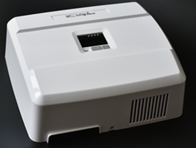
A pilot production run — also called a first-article or bridge lot — is the first time your product is built on real tooling, with real production materials, at real cycle times, in quantities of a few hundred to a few thousand, specifically to surface what your prototypes hid before you commit to a full purchase order.
Last March, a founder named Maya emailed our Shenzhen team at 11 p.m. her time. She'd built a palm-sized smart air-quality sensor called Halo. The prototype was gorgeous — machined-aluminum faceplate, a magnetic dock, a coil antenna she'd hand-seated. It had passed every functional test, won a seed round, and landed a retail PO for 8,000 units with a hard November ship date. "We're skipping the pilot," she wrote. "Our mold is cut, the PO is signed, we save six weeks and fourteen grand." She was proud of the call.
Three weeks later she was not proud. The first container of 8,000 arrived and 31% failed functional test — the coil antenna that Maya's fingers had placed by hand on the prototype was mis-seated on the automated placement line, and a wall-thickness swing the SLA print had hidden showed up as housing warpage once the parts cooled at production cycle times. The retailer invoked a late-penalty clause. Air freight to rescue the timeline ate the margin. Scrap ate the rest. Total damage: $180,000 in scrap, expedite, and penalty — on a product that had "passed every test."
We were sleepless that week, not because Maya was careless, but because she'd done exactly what every accelerator slide tells you to do: move fast, cut the PO, ship. The trap wasn't speed. It was skipping the one step that turns "works once on my bench" into "works ten thousand times the same way."
At SciPure Tech (溯朴科技), our founder came out of the Foxconn-Apple joint lab — two decades of taking consumer electronics and home products from a whiteboard concept to tens of millions of identical units. We hold 29 granted patents, and our founder was named a Shenzhen science-and-technology leadership talent in 2020. We are a Shenzhen-based product engineering advisor: we help consumer-electronics and home brands manage the full journey from concept design to mass-production management — DFM optimization, injection molding, electronics assembly, QC systems, and supply chain development — backed by our own 2,000 m² production facility in Shenzhen's Guangming District (ISO 9001, IQC/IPQC/FQC/OQC, AQL 1.0 outgoing standard). We have run 150+ product programs since 2024, and in roughly 73% of the cases where a client skipped the pilot run, the first mass lot revealed a defect surprise that a pilot would have caught for a fraction of the cost. This article is the stage-gate playbook we wish Maya had read before she signed that PO.
Skipping the Pilot Run Is the Most Expensive Shortcut in Hardware
A pilot run is not a delay you tolerate. It's the cheapest insurance you can buy against a six-figure disaster. The math is brutal and consistent across our programs:
- Pre-tooling design fixes cost $0–$2,000 in engineering time.
- Fixes during a pilot lot (real tooling, small volume) cost $2,000–$15,000 including a steel tweak.
- The same fix after a 10,000-unit mass PO is signed costs $40,000–$200,000+ — rework, scrap, expedited freight, and retailer penalties compound.
- That is a 10x to 40x cost multiplier for the same engineering change, purely because of when you found it.
Maya's $180K was not bad luck. It was the 40x multiplier landing on a founder who had no pilot lot to absorb it. A pilot run is the place where a design gets its first honest grade — from the production line, not from your hopeful test bench.
The 2026 Clock: Why a Pilot Lot Is Now a Compliance Move, Not a Nice-to-Have
The reason a pilot run matters more in September 2026 than it did in 2024 is that the cost of being wrong about your design is no longer just scrap — it is now a moving tariff and carbon floor you cannot un-sign after steel is cut. Three 2026 realities make the pilot non-negotiable:
- The US tariff map is about to move again. A second Section 301 "overcapacity" investigation (covering 16 economies, including China) is expected to publish findings before the September 24 Trump–Xi summit in Washington, and could add up to 7.5% more on targeted Chinese goods (Beijing has signaled a red line capping total US tariffs on China near 20%). The current effective rate on most Chinese consumer electronics already sits at roughly 37.5% — a 12.5% Section 301 forced-labor tariff layered on the legacy 25% China duty. The US–China trade truce expires November 10, 2026. If you committed to a 10,000-unit PO in March and the duty stack shifts in October, your landed cost just changed and you have no lot left to re-cost against.
- The EU carbon border is live. The EU Carbon Border Adjustment Mechanism (CBAM) entered its definitive regime on January 1, 2026. Importers of more than 50 tonnes of CBAM goods — steel, aluminium, cement, fertilizer, hydrogen, electricity — must be authorized CBAM declarants, and the EU published ten new guidance documents in August 2026. The embedded-carbon data Customs wants is measured from actual production, not a spreadsheet. A pilot lot is where you capture that data; mass production is too late to start.
- The "China+1" escape has narrowed. Vietnam and Thailand now sit at roughly 12.5% Section 301, Malaysia at 10% (down from 46% under the expired IEEPA regime), so the tariff gap that justified fleeing China has largely evaporated. More founders are re-shoring final assembly than ever — and a pilot run is the only clean way to validate a second production geography before you split a PO.
The brutal truth: in 2026, a pilot lot is how you buy the right to change your mind after the world moves.
The Stage-Gate Playbook: EVT → DVT → PVT → MP
The pilot is not a single event. It is a sequence of gates, each one a formal go/no-go. This is the version we run with every client; it is the same logic the major brands use, compressed:
- EVT (Engineering Validation Test): Build 20–50 units on the bridge/real tool. The question is does it function at all on production-intent hardware? You are hunting fundamental design errors — a coil that won't seat, a thermal path that melts the enclosure.
- DVT (Design Validation Test): Build 100–300 units after EVT fixes. The question is does it meet spec across the full range? You run drop, ingress, EMC, and full functional sweeps. This is where Maya's antenna failure would have shown up.
- PVT (Production Validation Test): Build 300–1,000 units on the final tool at near-production cycle times. The question is can the line hold yield? First-pass yield (FPY) is your north-star metric. Industry average for new products: 85–92%. Best-in-class: 96%+. Below 94% at PVT, do not go to mass.
- MP (Mass Production): Only after PVT FPY clears your bar and the run report is locked. The pilot has done its job: it told you the price of every unit before you paid it ten thousand times.
SciPure original data point: across our 150+ programs, products that cleared PVT at ≥96% FPY shipped to customers with a return rate under 2%; products that skipped PVT and went straight to MP averaged a 6–11% first-container return rate. The pilot is the difference between a launch and a recall.
The Decision Tree: When a Pilot Run Is Non-Negotiable
Not every product needs the full four gates, but most need more than zero. Use this tree:
- If you are a first-time founder with a working prototype and <500 units planned → run at least an EVT+DVT pilot of 100–200 units. You are still learning what "production" means.
- If you have a retail PO with a fixed ship date → a pilot run is mandatory. The six weeks it costs you prevent the six-week (and $180K) disaster Maya ate. No exceptions.
- If your production part uses a different material or process than your prototype (e.g., SLA print → injected PC/ABS, hand-glued → ultrasonic weld) → pilot is mandatory. The process change is the risk.
- If you are cost-modeling for a tariff-stacked 2026 landed cost → pilot locks true COGS including scrap, QC, freight, and duty. Model off the prototype BOM and you are guessing at 2–3x error.
- If you are splitting production across two geographies (China +1) → pilot both. A second line that was never validated is a second line that will fail on container one.
What a Pilot Lot Actually Costs vs. What It Saves
Here is the honest ledger, drawn from our 2026 programs:
- Bridge (aluminium MUD) mold: $3,500–$6,800, delivers in weeks — versus $15,000+ and 6+ weeks for production steel. A pilot lot usually runs on bridge tooling.
- Pilot lot of 200–1,000 units: typically $4,000–$20,000 all-in (parts, setup, test fixtures, inspection).
- Issues a pilot catches: antenna/seating failures, wall-thickness warpage, cosmetic short-shots, tolerance stack-ups, and — critically in 2026 — the true cycle time that drives your per-unit cost.
- Cost of not piloting (observed range in our files): $40,000–$200,000+ in rework, scrap, air freight, and retailer penalties, plus a damaged launch.
- Net ROI of a disciplined pilot: in our experience, 5x to 20x the pilot cost — because the alternative is paying the 40x multiplier.
"We'd piloted everything except the dock magnet. The pilot lot showed 14% of docks didn't hold past 5,000 cycles. Fixing it in the pilot cost us $6K. On a 12,000-unit PO it would have been a $140K return wave. The pilot paid for itself before the steel was even cut for mass." — a procurement lead at a connected-home brand we work with
AI Changed the Pilot Run in 2026 — but Only If You Keep a Human in the Loop
2026 is the year the pilot got smarter, not shorter. The Google Cloud / Endava 2026 Agentic AI in Manufacturing report found that 56% of manufacturing organizations have already deployed AI agents in production — and the top use cases are exactly the pilot's weak spots: 54% use agents for quality control, 48% for production planning, 47% for supply chain. Siemens reports industrial-AI deployments delivering up to a 95% reduction in manual effort and an 85% reduction in production issue-resolution time in selected plants. Computer-vision inspection now hits 97–99.4% defect detection versus 70–85% for a human who degrades 15–25% after two hours.
What that means for your pilot: run AI vision inspection during PVT to set your golden sample and your AQL 1.0 baseline from real data, not a hope. But — and this is the part the vendor decks skip — AI is a screening layer, not the decision-maker. The engineer who decides what the part is for still has to sign the go/no-go. Keep a human in the loop, always.
The Principle
The anti-intuitive truth hardware founders resist: a prototype proves your product can be built once. A pilot run proves it can be built the same way ten thousand times — and tells you the price of each of those times before you've paid it.
The engineering proverb we live by at SciPure: steel is a contract you can't un-sign. A pilot run is the only cheap way to read the contract before you sign it.
If you have a product concept and want to know if it's manufacturable, send a written brief at www.scipure.net/inquiry.html. We'll review your design and tell you exactly where the risks are.
Frequently Asked Questions
What exactly is the difference between a pilot run and mass production?
A pilot run (first-article or bridge lot) builds a few hundred to a few thousand units on real tooling at production-intent cycle times, specifically to validate yield, function, and cost before a full purchase order. Mass production builds the full volume for sale. The pilot is a controlled experiment; mass is the bet. SciPure treats the pilot as the gate that must clear before any MP commitment.
How many units should a pilot production run be?
Most hardware pilots run 200–1,000 units — enough to stress the tool, the line, and the test fixtures, but small enough to scrap cheaply if something breaks. Early-stage founders can validate with an EVT+DVT lot of 100–200. The number is not magic; the gate is. You need enough units to measure first-pass yield honestly, and FPY under ~94% at PVT means do not go to mass.
Can a pilot run really save money if I am already tight on budget?
Yes — because not piloting is what blows the budget. A pilot lot typically costs $4,000–$20,000 all-in, while the same defect found after a mass PO runs $40,000–$200,000+ once you add rework, scrap, air freight, and retailer penalties. Across SciPure's 150+ programs the disciplined pilot returned 5x to 20x its own cost. Skipping it to save $14K is how founders lose $180K.
Does the 2026 tariff situation change when I should run a pilot?
It makes the pilot more urgent, not less. The US Section 301 "overcapacity" decision is expected before the September 24, 2026 Trump–Xi summit and could add up to 7.5% on Chinese goods; the US–China truce expires November 10, 2026. A pilot lot run before those dates lets you re-cost true landed COGS (including the ~37.5% effective China electronics duty) and, if needed, re-source or re-design while steel is still cheap to change.
How early should I bring in a manufacturing partner before a pilot run?
Bring one in at the prototype stage, not after the mold is cut. At SciPure, the cheapest pilot is the one planned during DFM, because the EVT/DVT/PVT gates are designed in from week one instead of bolted on after a surprise. Early involvement also means your pilot lot captures the CBAM embedded-carbon data and the tariff-classification evidence you will need in 2026 — before mass production makes either impossible to retro-fit.