To vet a Chinese manufacturing partner is to qualify who will actually make your product before you sign a purchase order — and in 2026 that means something very different from what it meant five years ago. The old playbook (fly in, tour a tidy workshop, photocopy an ISO 9001 certificate, shake a hand) was built for a world where the risk was "is this a real factory." Today the risk is "what is this factory's supply chain actually made of" — and a clean floor tells you nothing about that.
We watch hardware founders make the same expensive mistake every quarter, so let's walk through the version that almost cost one of them a season's revenue.
The Tuesday Daniel's $400K Shipment Got Detained by Something His Factory Had Never Checked
Daniel runs a small connected-home brand out of Austin. He sourced an aluminum-housed sensor through a Shenzhen "factory" that looked impeccable: a spotless workshop, a wall of certificates, an English-speaking sales team, and references he could call. He did the diligence everyone told him to do. The factory passed.
Six weeks before Black Friday, U.S. Customs and Border Protection detained a $400,000 shipment at the port. The reason was not Daniel's design, his quality, or his paperwork. It was the anodized aluminum extrusions — two tiers down, supplied by a sub-contractor his "factory" had never audited. That sub-contractor had been added to the UFLPA entity list a few weeks earlier. Daniel's factory had looked no further than its own receiving dock, and Daniel had looked no further than the factory.
The brutal truth landed in a single sleepless night: the certificate proved the building had passed an audit. It said absolutely nothing about the materials that walked through its door. He had vetted a sign on a door, not a supply chain.
This is the story we tell founders now, because it is no longer rare. It is the new normal.
The Audit Theater Problem: A Certificate Proves the Building, Not the Materials
A Chinese factory audit in the traditional sense checks the things that are easy to stage. Tidy lines. Trained responders. A framed ISO 9001. Those are real signals, but they measure the shop floor — the part a supplier can dress up for a Tuesday visit.
What they do not measure is the part that actually burns you:
- Who is really behind the "factory." 2026 sourcing advisories flag a rising pattern of "factory fronts" — trading companies leasing a small workshop to simulate production. They show you a demo zone; the real work happens at a third party you will never meet.
- Where the raw materials and sub-components come from. This is the exact gap that detained Daniel's shipment.
- Whether the claims survive contact with documentation. One 2026 procurement survey found over 40% of "smart factory" or "AI-driven production" claims were unsubstantiated when checked against actual equipment and energy data.
The pattern has a name in procurement circles now: audit theater. Everyone performs diligence; almost nobody checks the supply chain behind the performance. That is precisely where 2026's regulatory risk lives.
What Does It Take to Vet a Chinese Manufacturing Partner in 2026?
The honest answer: you are no longer qualifying a building. You are qualifying a network. The question "is this a factory?" has been replaced by "what is the supply chain behind this factory, and can I prove it if a customs officer asks?"
For UFLPA compliance specifically, the math got serious in 2026. The UFLPA entity list jumped by 43 entities in a single August action — the largest single batch since the law took effect — bringing the total to 187. More important than the count is the method: enforcement now uses supply-chain penetration. If U.S. authorities can trace a listed input anywhere in your production chain — even through a third country — the finished goods can still be detained. And the importer typically gets about 30 days to produce a full, documented rebuttal, or the goods are forfeited.
So the modern scope of due diligence has three layers, and most teams still only do the first:
- Layer 1 — Is this a real manufacturer? Business license scope (via China's national enterprise registry), equipment ownership, export history, live video during operating hours. The floor check.
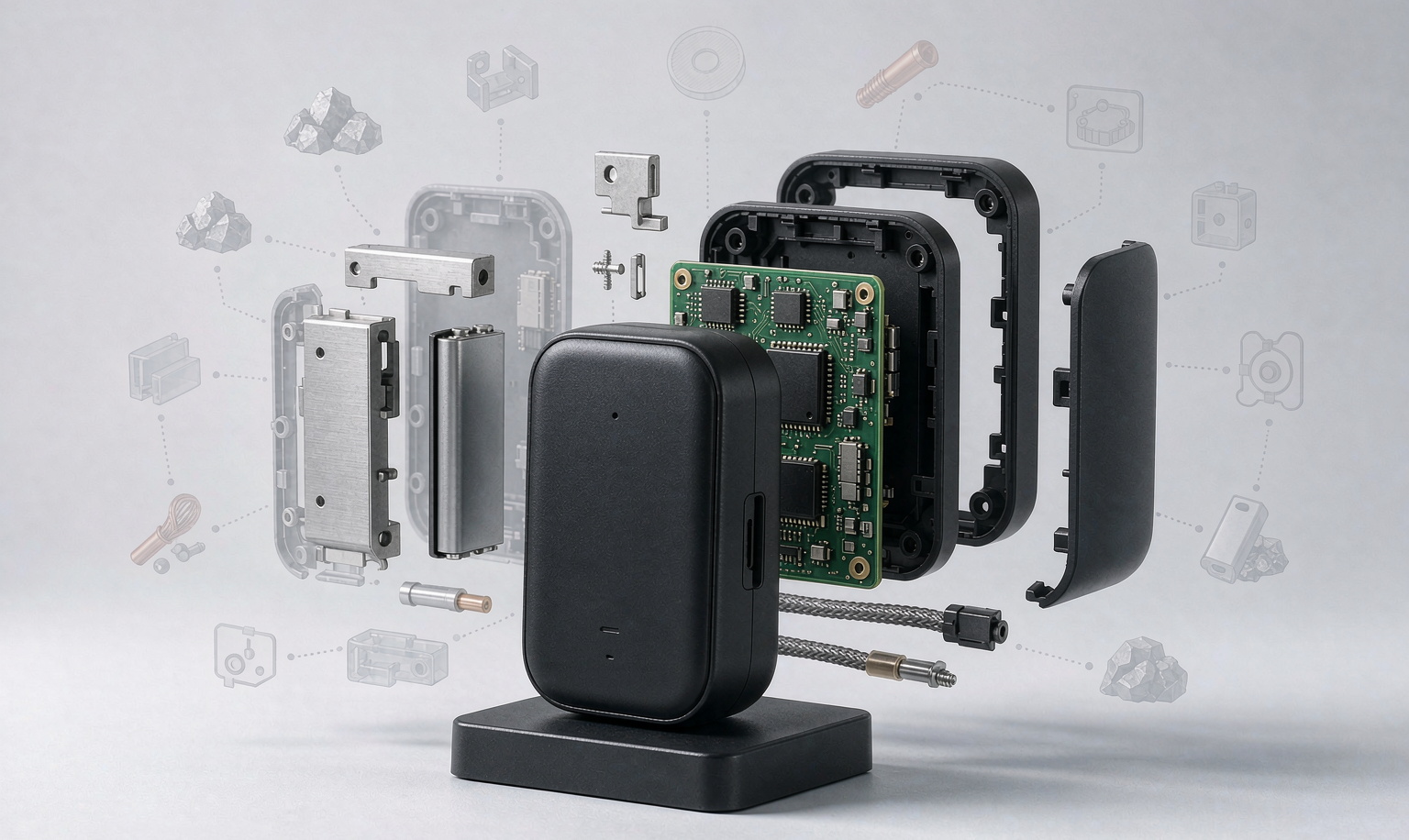
- Layer 2 — What is inside the product? A sub-supplier map for every critical material: the aluminum, the cell, the silicone, the cable. Where was each born, and who handled it?
- Layer 3 — Can I prove it on a 30-day clock? Batch-level traceability records — purchase orders, mill certificates, logistics, and payments — bound to the specific lot that is sitting on the dock.
If you only did Layer 1, you are Daniel. The good news is Layer 2 and 3 are mechanical once you decide to require them.
How to Vet a Chinese Manufacturing Partner Without Flying Blind
You do not need to be a customs lawyer to close these gaps. You need a checklist that treats the supply chain as the thing being qualified. Here is the practical sequence we hand founders:
- Verify the legal entity first. Pull the business license and read the registered scope. "Manufacturing" vs. "import/export / trading" tells you immediately whether you are talking to a maker or a middleman. Cross-check the registered address against shared-shell patterns.
- Demand a live walkthrough during operating hours, not a scheduled tour. A real factory shows active lines; a front shows a stockroom or a borrowed bay. Ask to speak to the production manager and an engineer, not only sales.
- Require a tiered sub-supplier disclosure for high-risk inputs. If your product contains aluminum, copper, silicon, cotton, PVC, or a lithium cell, you need the origin of those specific materials — not a promise.
- Bind traceability to the batch, not the relationship. Ask for the documentation set for this purchase order: mill cert, PO, logistics, payment. If they cannot produce it within days, they cannot produce it within 30 if CBP calls.
- Watch the money. Pressure for more than ~50% upfront, payments to personal accounts, or refusal to sign an NDA/IP clause are disqualifying signals regardless of how nice the workshop looks.
None of this requires a flight. A growing share of 2026 verification is done remotely: timestamped live video, equipment QR scans, and blockchain-secured audit logs. The teams that move fast are the ones who stopped treating a visit as proof.
A Founder's Decision Tree: What to Require Based on Your Risk
Not every product needs the full penetration. Use this to size the effort:
- If your product is simple plastics with no regulated inputs → a basic factory audit (Layer 1) plus sample testing is enough. You are low on the UFLPA radar.
- If it contains aluminum, copper, silicon, cotton, or PVC → require a sub-supplier traceability map (Layer 2) and screen those tiers against the entity list before you cut tooling. This is the Daniel scenario; do not skip it.
- If it has a rechargeable battery or intentional radio → add the certification track (UN 38.3, IEC 62133-2, FCC ID, CE-RED) and dual-source the cell and the radio module. Compliance and supply-chain risk now travel together.
- If you are a connected device selling into the EU → add the Cyber Resilience Act security documentation and, from February 2027, the battery-removability rule. These are design constraints, not end-of-line paperwork.
- If the supplier resists any of the above → that resistance is the answer. A genuine manufacturer is proud to show its tiers; an opaque one is telling you what it is hiding.
A procurement manager we work with sums it up bluntly: "I used to ask 'can you make this?' Now I ask 'show me where every gram came from.' The second question caught three problems the first one missed."
What the Disciplined Programs Do Differently
The teams that never get surprised are not luckier. They built supply-chain penetration into supplier development from day one.
At the Foxconn-Apple joint laboratory where our founder spent two decades, the rule was unbending: you did not qualify a factory by walking its floor — you qualified its suppliers. A new program opened with a tiered supplier map, incoming-material controls (IQC/IPQC/FQC/OQC) with real execution traces, and AQL-defined acceptance that was documented at every gate, not declared on a certificate. A partner could have a beautiful building and still fail because its tier-2 aluminum could not be traced.
SciPure Tech (溯朴科技) in Shenzhen is a product engineering advisor taking products from concept to mass production. Our founder came out of the Foxconn-Apple joint laboratory with roughly two decades of carrying consumer-electronics and home products from concept to mass production. We hold 29 granted patents, and our founder was named a Shenzhen science-and-technology leadership talent in 2020. We run our own 2,000+ m² ISO 9001 facility in Shenzhen's Guangming District with AQL 1.0 outgoing inspection — but what we sell is the engineering judgment that keeps a program honest, including the supplier-qualification discipline that Layer 2 and Layer 3 demand.
If you want the engineering half of this, the design for manufacturing reduce manufacturing costs and how to reduce manufacturing cost before tooling pieces cover cost and tooling risk, and the factory quality control checklist piece covers the inspection system that sits on top of a qualified supply base. More on the program at www.scipure.net.
The Principle: You Are Qualifying a Supply Chain, Not a Sign on a Door
The certificate is real. The workshop may be real. Neither of them is your product's origin. The only thing that is your product's origin is the full chain of who touched every gram — and in 2026, the regulators will ask you to prove it faster than you can book a flight.
The old rule of hardware sourcing was "trust, but verify the building." The 2026 rule is sharper: verify the supply chain, because the building was never the thing that could sink you.
FAQ
How do I vet a Chinese manufacturing partner in 2026?
Start with the legal entity (business license scope, equipment ownership, export history), then go one level deeper than the factory floor: require a tiered sub-supplier map for any high-risk material (aluminum, copper, silicon, cotton, PVC, lithium cells) and batch-level traceability records you could produce within 30 days. A live video walkthrough during operating hours beats a scheduled tour. The goal is to qualify the supply chain, not just the building.
How can I tell if a "factory" is actually a trading company?
Read the registered business scope: "manufacturing" means a maker; "import/export" or "trading" means a middleman. A genuine factory owns and operates CNC machines, molds, and assembly lines, employs engineers and QC staff, and can show live production on short notice. Traders show stockrooms, rely on third-party plants, and route communication through sales only. Watch for "factory fronts" — traders leasing a small workshop to simulate production.
What is UFLPA compliance and why does it matter for sourcing from China?
The Uyghur Forced Labor Prevention Act creates a rebuttable presumption that goods linked to certain Xinjiang-related entities are barred from the U.S. market. Enforcement uses supply-chain penetration: if a listed input appears anywhere in your chain — even through a third country — finished goods can be detained, and the importer typically has about 30 days to produce full documentary rebuttal. With the entity list at 187 and growing, it matters for any product with aluminum, cotton, silicon, PVC, or related inputs.
What documents prove supply chain traceability?
For a given batch: the purchase order, mill / Material Test Certificate, logistics waybill, and payment record for each critical material, bound to the lot on the dock. Tier-2 and tier-3 supplier disclosures and a sub-supplier map round it out. The test is simple — if your partner cannot assemble this set within a few days, they cannot assemble it within the 30-day CBP window either.
Do I need a third-party audit or can I do it myself?
For Layer 1 (factory legitimacy and floor capability), a reputable third-party audit from SGS, TÜV, or Intertek is worth the budget before any purchase order. Layers 2 and 3 (sub-supplier map, batch traceability) are best driven by you through contract clauses and documentation requirements, because they are specific to your product. Many 2026 teams combine both: third-party for the floor, in-house for the chain.
If you have a product concept and want to know if it's manufacturable, send a written brief at www.scipure.net/inquiry.html. We'll review your design and tell you exactly where the risks are.
Your light next step: reply with "VET" and we'll send you our one-page 2026 Supplier Vetting Checklist — the factory-front red flags, the sub-supplier traceability map template, and the UFLPA exposure questions to put in every supplier contract. It's the same sheet we run before any purchase order.
Related deep resources: