Last September, an email landed from Tom, a founder in Portland. "We're targeting a Q1 launch. We have CAD files ready. Looking for tooling and first production by November."
I opened the attachments. No draft angles on any of 15 plastic parts. Wall thickness ranging from 0.9mm to 3.8mm. Seven undercuts adding $18K-25K per cavity. Material specified simply as "ABS" — no grade, no UL rating. Tom had given himself 10 weeks to go from unfinished CAD to mass production.
This is not unusual. Of the 127 projects we've handled at SciPure, 41% arrived with timelines compressed by 40% or more relative to what was actually needed.
Why Every Timeline You've Been Given Is Optimistic
Your prototype shop quotes 2-week SLA turnaround — they don't mention those prints hide 47% of DFM issues. Your factory's sales rep says "we can hit November" — which in factory-speak means "we'll start the PO process in November." Accelerator demo days reward speed narratives, not honest schedules.
Standard hardware development takes 12-24 months from concept to stable production. Here's the reality:
| Phase | Quoted | Realistic | Where Time Gets Lost |
|---|---|---|---|
| Idea & Validation | 1-3 wks | 3-6 wks | Feasibility back-and-forth |
| Design & Specs | 2-4 wks | 4-8 wks | Incomplete tech packs, revisions |
| Supplier Search & RFQ | 2-4 wks | 3-6 wks | Quote clarification, timezone delays |
| Sampling & Prototyping | 4-8 wks | 8-14 wks | 2-3+ iterations, material swaps |
| Testing & Compliance | 2-6 wks | 4-12 wks | Failed tests = redesign + retest |
| Tooling & Pre-Production | 2-4 wks | 5-10 wks | T0/T1/T2 adjustments, mold mods |
| Mass Production | 4-8 wks | 6-12 wks | Queue position, material availability |
| Total (simple product) | ~17 wks | ~33-64 wks | Compounding delays |
For complex electronics: 9-14 months minimum. For a first product from a first-time team: 20-36 weeks of validation alone.
The Hidden Cost of Every Missed Week
At $80K/month burn rate, every week of delay = $20K in consumed runway. But the cascade is worse:
- Inventory timing miss: Slip from Q1 to Q2 and you might miss the retail buying cycle entirely — a 12-month revenue delay
- Component allocation: Key semiconductors still run 16-52 week lead times in 2026
- Certification clock resets: A failed test adds redesign + sample fabrication + re-test = 4-8 weeks
- Tariff uncertainty: As of July 2026, effective rates average 21.6%. A delayed launch means launching into a potentially different tariff regime
EVT → DVT → PVT: Where Timelines Go to Die
EVT (Engineering Validation Test): Does It Work?
5-20 units, hand-assembled. Verify power rails, MCU boots, sensors communicate. Duration: 4-8 weeks. Killers: PCB schematic errors (2-3 spins for first-timers), firmware bring-up, component stockouts.
DVT (Design Validation Test): Does It Meet Every Requirement?
20-100 units. Full functional verification, environmental testing, reliability testing, pre-compliance scans. Duration: 6-12 weeks. Fixing an architectural defect here costs 100x what it would at concept design.
PVT (Production Validation Test): Can We Build Thousands?
Hundreds to thousands of units. Full assembly line, automated test fixtures, QC checkpoints, First Pass Yield tracking. Duration: 4-8 weeks. Low FPY = loudest red flag. Every point below target directly erodes margin.
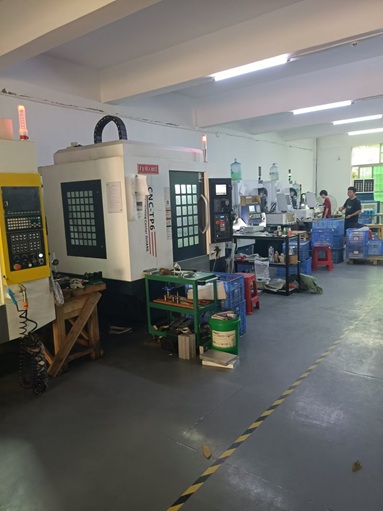
The validation gauntlet — where EVT, DVT, and PVT separate products that ship from products that don't
Total validation runway: 14-28 weeks minimum. First-time teams: 20-36 weeks (5-9 months).
The Three Timeline Archetypes
| Type | Behavior | Typical Error | Fix |
|---|---|---|---|
| The Optimist | Plans around best-case quotes; zero iterations | Underestimates by 40-60% | Add 1.8x reality multiplier to all vendor timelines |
| The Pragmatist | Includes buffers; knows EVT/DVT/PVT | Underestimates compounding inter-phase delays | Map critical path with dependency awareness |
| The Engineer-Founder | Has done PCB layout; deeply respects complexity | Perfectionism-driven scope creep | Define ship-blocking vs. acceptable bugs before DVT |
A Realistic Planning Framework
Step 1: Start From the End Date
Don't ask "how long does development take?" Ask "when do I need product in customers' hands?" Then work backward:
| Milestone | Date (Q4 2026 launch) |
|---|---|
| Retail shelf date | Nov 15, 2026 |
| Ocean freight / logistics | Oct 1, 2026 |
| Mass production complete | Aug 6, 2026 |
| PVT phase | Late Jun 2026 |
| DVT phase | Mid Apr 2026 |
| EVT phase | Mid Feb 2026 |
| DFM & design freeze | Mid Jan 2026 |
| Finalize CAD / tech pack | Early Dec 2025 |
| Concept & feasibility | Nov 2025 |
| Total: 12+ months |
Step 2: Identify Critical Path Dependencies
Longest-lead component. Certification lab availability (4-12 week queues). Tooling shop schedule (4-8 week booking). Factory production slot (Q4 is peak — secure by June).
Step 3: Build Decision Gates With Kill Criteria
"If T0 shows more than 3 cosmetic issues requiring mold modification, we pause and reassess." "If PVT FPY drops below 92%, we halt production until root cause is identified." Gates without teeth are suggestions. Gates with predefined consequences are project management.
What Happened to Tom
Tom revised from 10 weeks to 9 months. We found 14 manufacturability issues pre-tooling. Redesigned 3 parts to eliminate side-action undercuts (saved ~$22K). Specified actual ABS grade with UL94 V-0 rating. Replaced custom Bluetooth module (lead time: 4 weeks vs. 16). Secured October production slot by June.
Result: launched late October 2026. Field return rate: 1.1% (industry average: 4-8%). The $40K spent on engineering services prevented an estimated $180K+ in tooling rework, certification failures, and delay costs.
The Principle
The fastest timeline isn't the one with the fewest weeks on paper. It's the one where every week moves you closer to a shippable product — not closer to discovering your plan was built on assumptions that were never true.
Want to know your realistic timeline? Send us your CAD and specs for a free development timeline assessment.
Published: July 9, 2026 | Category: Hardware Development Planning
Comments (3)
The backward-planning table just saved us from committing to an impossible Q4 launch. Working backward from our target date revealed we should have started DFM in January. We're now pushing to Q1 2027 with a realistic plan. Tom's story hits home — we were on the exact same trajectory.
The "three archetypes" section is brutally accurate. I'm the Engineer-Founder. We delayed our launch 4 months chasing a cosmetic edge case that affects 0.2% of units. The ship decision framework is now written into our project charter. Lesson learned the hard way.
Shared this with our investors. The phase-by-phase realistic timeline table was the evidence we needed to justify extending our runway by 6 months. The PVT FPY gate at 92% is now a board-level KPI. Outstanding article — wish we'd found this 8 months ago.
Leave a Comment