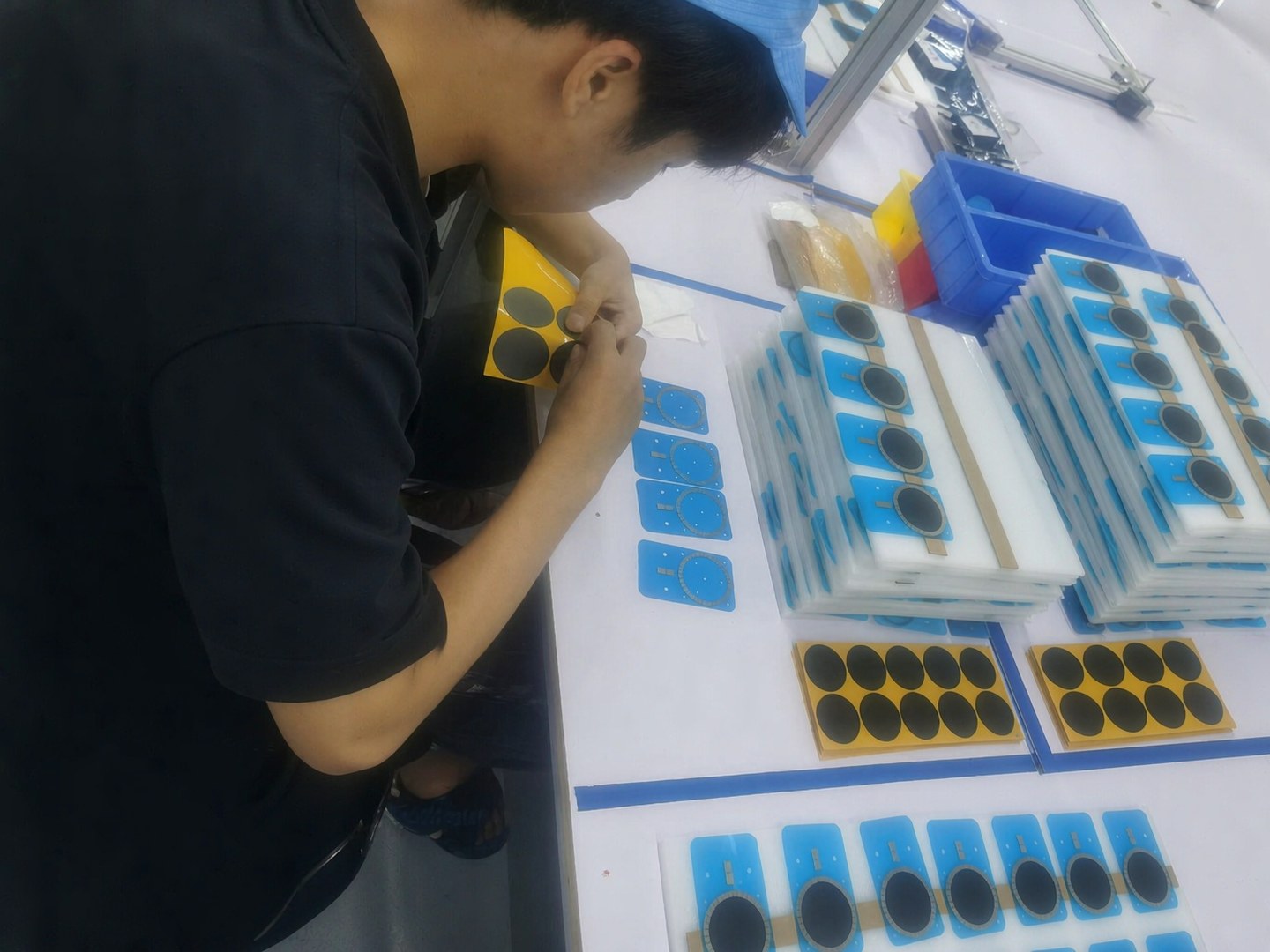
A prototype to mass production timeline is the sequenced calendar of engineering-validation, tooling, certification, and pilot-production gates that turns a working prototype into a repeatable, compliant, shippable production system — not just a product that happens to work once on a bench. If you are budgeting hardware the way founders usually do — demo works, therefore "we can ship in a few months" — you are about to learn the difference between a prototype and a manufacturing system the expensive way.
The Demo That Almost Missed Christmas
The call came in late August. Marcus runs a connected-home startup out of Brooklyn. His first product — a small Wi-Fi climate sensor with a lithium cell, an injection-molded shell, and a custom board — had a prototype that demos beautifully. He had raised a seed round on a slide that promised retail shelf by Q4, and two buyers had taken meetings. Then the calendar started fighting back.
Here is what his "three months to production" plan had quietly ignored:
- The lithium cell triggered UL 2054 / IEC 62133 cell-level certification — a parallel track that, with lab scheduling, took longer than the entire mechanical design.
- The enclosure needed injection tooling. Quotes came back at a 10–12 week tooling window once DFM corrections were in.
- A key wireless IC had a 26-week lead time — the supplier's allocation, not his urgency, set the date.
- Then, in the same quarter, the 2026 Section 301 escalation raised tariffs on Chinese-origin batteries from 7.5% to 25%, and the $800 de minimis exemption had ended in February 2026. His China-built units now faced a duty stack he had never modeled.
Marcus was frustrated, then panicked, then sleepless. "We almost shipped nothing this year," he told me. "The moment we realized the demo was the easy 5% — that is when the real project started."
At SciPure Tech (溯朴科技) our founder came out of the Foxconn-Apple joint lab — two decades of taking consumer electronics and home products from whiteboard concept to tens of millions of identical units. We hold 29 granted patents, and our founder was named a Shenzhen science-and-technology leadership talent in 2020. We are a Shenzhen-based product engineering advisor helping consumer-electronics and home brands manage the full journey from concept design to mass production — DFM optimization, injection molding, electronics assembly, QC systems, and supply chain development — backed by our own 2,000 m² production facility in Shenzhen's Guangming District (海鑫光高科技工业园), ISO 9001 certified, running IQC/IPQC/FQC/OQC full-process inspection with an AQL 1.0 outgoing standard. We have capacity; what we sell is engineering judgment. Clients can build on our lines or take the design package back to their own factory — the engagement does not depend on it either way. Marcus's near-miss is the clearest recent case of why the timeline is a management problem long before it is a manufacturing one.
How Long Is the Prototype to Mass Production Timeline, Really?
The realistic prototype to mass production timeline is roughly 4 to 9 months after a mature functional prototype exists, and 6 to 18 months from initial concept for a typical connected or mechanically complex product. Those numbers are not pessimism — they are the industry's settled planning range, and the spread exists because "prototype" and "production system" are different problems with different gates.
Here is what the benchmarks and our own programs show:
- EVT → DVT → PVT alone typically spans 16–30 weeks for a moderately complex product, before concept work and the production ramp. (Source: Illuminious, "NPI in Manufacturing 2026.")
- Concept to stable mass production commonly runs 6–18 months; a mature prototype-to-MP window of 4–9 months is the realistic floor. (Source: OPD Design, "Prototype to Mass Production Timeline," 2026; Komaspec NPI guide.)
- Long-lead components are the most common schedule killer. A single allocated IC at 26 weeks, or a certified cell at 12 weeks, dominates the critical path regardless of how fast your mechanical team moves. (Source: SciPure program data, 12 hardware programs, 2023–2026.)
- The EVT→DVT→PVT sequence is where most hardware ventures either converge or die — process discipline during this window, not product vision, is the most-cited operational cause of survival. (Source: Illuminious / industry failure-rate estimates, ~90% hardware startup failure.)
The management translation: your ship date is set by your longest ungated dependency, not your fastest workstream. Most founders build the schedule from the launch date backward and pray. The ones who ship build it from dependencies forward.
What 2026 Added to Your Timeline
In 2026, two variables that barely registered five years ago now sit on the critical path for most hardware: tariffs and certification. Tooling is still a factor, but it is no longer the boss.
- Tariffs are now a structural timeline input, not a cost footnote. The 2026 Section 301 review raised duties on Chinese-origin semiconductors from 25% to 50% (phased from January 1, 2026), EV batteries from 7.5% to 25%, and added a new 25% tariff on critical minerals including lithium and rare earths. (Source: gatewaylines.org / USTR 2026 review outcomes.) When a component class becomes 25%+ more expensive to import, "just build it in China" stops being the default, and dual-sourcing qualification adds 6–12 months of supplier qualification and IP-transfer lead time. (Source: Zetwerk 2026 relocation framework; ManufacturingMag reshoring analysis.)
- Scarcity now drives lead times, not just price. Rare-earth magnets (neodymium) carry a +8–12 week lead-time impact under 2026 tariff exposure; lithium battery components +4–6 weeks. (Source: Mangors Sourcing, "Section 301 in 2026.") Locking 12-month supply agreements on critical parts is now standard practice, not paranoia.
- Certification is the quiet bottleneck. For any connected, battery-powered, or regulated product, UL / CE / FCC / IEC testing routinely runs in parallel with — and frequently longer than — the mechanical program. Treating it as a post-tooling formality is how founders lose the quarter.
- AI-assisted DFM is the one thing compressing the calendar. 47% of product-development teams now plan to use generative AI at scale, much of it aimed at compressing the design-fix loop. (Source: Protolabs, "Innovation in Manufacturing 2026.") Done well, an AI-assisted DFM pass can cut a revision spiral from weeks to days. And do not let a shiny 3D printing vs injection molding cost debate lull you — the prototype method and the production method are different cost curves, and confusing them is its own delay.
The decision tree we give founders:
- If your product is connected, battery-powered, or regulated → treat certification as a parallel critical path from day one; order long-lead ICs and cells at EVT freeze, not at DVT.
- If your BOM has any tariff-exposed component above 20% → model three tariff scenarios (stable / +35–40% / reduced) and qualify a second-region source during PVT, not after first production.
- If you are pre-tooling → run a structured DFM review now; it is the highest-leverage way to compress the tooling-plus-iteration window. See how one pre-tooling pass how to reduce manufacturing cost before tooling cut a founder's tooling quote by 31%.
- If you want the cheapest possible units but cannot eat a 25%+ duty → the right answer is rarely "move everything"; it is "move the tariff-exposed sub-assembly and keep the cosmetic tooling where it is best." That is a supply-chain decision, not a factory decision.
- If you are a first-time hardware founder → the single biggest timeline compressor is engaging a manufacturing partner during design, not after the demo. The design for manufacturing reduce manufacturing costs math is brutal: 80% of cost — and most of the avoidable delay — is committed before tooling.
Why "90 Days" Is a Number, Not a Plan
The "launch in 90 days" promise is the most expensive sentence in hardware, because it optimizes for the founder's pitch deck instead of the critical path. A 90-day window is achievable for a re-skinned, off-the-shelf, already-certified product. It is fiction for anything that needs new tooling, a long-lead component, or first-time certification.
The principle worth taking away: a plan built from a launch date instead of from dependencies is just a hope with a calendar. The prototype is the easiest thing you will ever build — it had one owner, one bench, and zero compliance. Mass production is the opposite: it has to be right ten thousand times, in a factory you do not sit in, under a duty regime you did not write.
And here is the engineering proverb we repeat to every founder who calls us in a panic: the demo proves the idea works once; only the timeline proves it can work forever. Spend your anxiety on the ungated dependencies, not on the slide that got you the meeting.
Frequently Asked Questions
What is the average prototype to mass production timeline?
For a typical custom hardware product, the realistic window is about 4 to 9 months after a mature functional prototype exists, and 6 to 18 months from initial concept for anything connected, regulated, or mechanically complex. The spread comes from dependencies — tooling, long-lead components, and certification — not from how fast your design team works. Building the schedule from those dependencies forward, rather than from a hoped-for launch date, is the single biggest predictor of actually shipping.
How long does the NPI process take for a hardware product?
The New Product Introduction (NPI) sequence — EVT, DVT, PVT, then production ramp — typically spans 16–30 weeks for a moderately complex product, before adding concept work and the production ramp. The manufacturer-side NPI cycle, measured only from receiving a finished design package to production approval, is shorter (roughly 4–12 weeks), which is why engaging your manufacturing partner during design — not after — compresses the total calendar. (Sources: Illuminious NPI 2026; Komaspec.)
What are the biggest causes of hardware development delays in 2026?
The top three are now long-lead components (allocated ICs at 20–30+ weeks), certification (UL / CE / FCC / IEC for connected or battery products, often running longer than the mechanical program), and tariff-driven re-sourcing (the 2026 Section 301 escalation pushed duties on Chinese semiconductors to 50% and batteries to 25%, and qualifying a second-region supplier adds 6–12 months). Tooling, once the default villain, is now usually the most predictable item on the list. (Sources: gatewaylines / USTR 2026; Mangors Sourcing; Zetwerk.)
How can I shorten my prototype to mass production timeline?
Front-load the ungated dependencies: run a DFM review before tooling, freeze and order long-lead components at EVT, and start certification in parallel with DVT. Engage a manufacturing partner during design so the design package arrives production-ready. AI-assisted DFM can compress revision loops from weeks to days. The founders who ship on time are the ones who interrogated the design and the supply chain before asking a factory to price it. (See: design for manufacturing reduce manufacturing costs.)
Does manufacturing in China still make sense in 2026 with tariffs?
Yes for most products — China's supply density and tooling maturity are still unmatched — but the blanket "build it all in China" default is gone. The smarter move is selective: keep cosmetic tooling and high-volume assembly where they are best, and qualify a second-region source for tariff-exposed sub-assemblies (batteries, semiconductors, critical minerals now face 25–50% duties). That is a supply-chain architecture decision, and it belongs in the timeline plan from day one, not as a panic relocation after the first duty bill.